new

Get trending papers in your email inbox!

Subscribe

Daily Papers

byAK and the research community

Oct 21

FluidLab: A Differentiable Environment for Benchmarking Complex Fluid Manipulation

Humans manipulate various kinds of fluids in their everyday life: creating latte art, scooping floating objects from water, rolling an ice cream cone, etc. Using robots to augment or replace human labors in these daily settings remain as a challenging task due to the multifaceted complexities of fluids. Previous research in robotic fluid manipulation mostly consider fluids governed by an ideal, Newtonian model in simple task settings (e.g., pouring). However, the vast majority of real-world fluid systems manifest their complexities in terms of the fluid's complex material behaviors and multi-component interactions, both of which were well beyond the scope of the current literature. To evaluate robot learning algorithms on understanding and interacting with such complex fluid systems, a comprehensive virtual platform with versatile simulation capabilities and well-established tasks is needed. In this work, we introduce FluidLab, a simulation environment with a diverse set of manipulation tasks involving complex fluid dynamics. These tasks address interactions between solid and fluid as well as among multiple fluids. At the heart of our platform is a fully differentiable physics simulator, FluidEngine, providing GPU-accelerated simulations and gradient calculations for various material types and their couplings. We identify several challenges for fluid manipulation learning by evaluating a set of reinforcement learning and trajectory optimization methods on our platform. To address these challenges, we propose several domain-specific optimization schemes coupled with differentiable physics, which are empirically shown to be effective in tackling optimization problems featured by fluid system's non-convex and non-smooth properties. Furthermore, we demonstrate reasonable sim-to-real transfer by deploying optimized trajectories in real-world settings.

  • 7 authors
·
Mar 4, 2023

Superspace Concentration and Adversarial Robustness in Quantum Algorithms

We study superspace concentration as a quantum resource, formalized through the focus measure F(ho) = λ_max(ho_super) - the largest eigenvalue of the reduced superspace state - which quantifies the capacity of a quantum system to concentrate informational weight into a preferred subspace of an extended degree-of-freedom space. We develop a complete resource-theoretic framework around this measure and validate its properties through GPU-accelerated numerical simulation. Analytic decoherence predictions are confirmed to machine precision (1.11 x 10^{-16}) for superspace dimensions dS in {2,4,8,16,32}. Focus monotonicity holds across 10,000 random states with zero violations under four focus-non-generating channels across six system configurations. Focused quantum states resist coherent unitary attacks with significantly greater resilience than standard fidelity predicts, with focus remaining above 0.9 at attack strength ε = 0.302 versus ε = 0.174 for fidelity. We further demonstrate that the focus measure and the U(dS)-asymmetry measure are operationally distinct: asymmetry remains near zero and provides no robustness signal under coherent and targeted attacks while focus tracks spectral concentration and remains robust until ε > 0.3. The connection between Grover's algorithm and superspace concentration is made explicit via the identity F(|ψ_k><ψ_k|) = P(marked), providing a resource-theoretic interpretation of oracle query complexity. Finally, we provide the first numerical characterization of the focus capacity gap ΔF, identifying a log_2(dS) scaling law confirmed for both product and correlated noise channels.

  • 6 authors
·
Jun 9

SceneFactory: GPU-Accelerated Multi-Agent Driving Simulation with Physics-Based Vehicle Dynamics

Autonomous-driving simulators typically trade physical fidelity for scalable parallelism. Physics-based platforms such as CARLA and MetaDrive provide articulated vehicle dynamics and contact, but their non-vectorized interfaces make batched training difficult. GPU-batched systems such as Waymax and GPUDrive scale to hundreds of scenarios by replacing rigid-body physics with simplified kinematic models, omitting tire--road interaction, suspension, contact dynamics, and road-condition-dependent friction. We introduce SceneFactory, a GPU-vectorized platform for procedural scene construction, physics-based multi-agent simulation, and RL in autonomous-driving environments. Built on NVIDIA Isaac Sim + Isaac Lab, SceneFactory represents worlds and agents as batched tensors: control, observations, rewards, resets, and policy inference run as GPU tensor operations over the Isaac Lab tensor API. SceneFactory converts Waymo Open Motion Dataset road topologies into simulation-ready USD worlds, runs many worlds concurrently on one GPU, populates each with multiple articulated PhysX vehicles, and maps precipitation and road-surface type to PhysX material friction coefficients. With GPU vectorization, SceneFactory achieves up to 127times higher throughput than a non-vectorized PhysX baseline on the same GPU and physics solver, reaching 19,250 controlled-agent simulation steps per second at 256 worlds times 16 agents. Cross-simulator transfer reveals an asymmetric dynamics gap: physics-grounded RL policies transfer to a simplified kinematic bicycle model with 99.5% success, whereas reverse transfer drops to 47.3%. Under wet-road friction, friction-aware policies reduce mean peak DRAC from 58.7 to 27.8,m/s^2 without sacrificing goal reach. SceneFactory shows that scalable autonomous-driving training need not discard articulated rigid-body dynamics or physically grounded road-condition variation.

  • 4 authors
·
May 7

MuJoCo-Drones-Gym: A GPU-Accelerated Multi-Drone Simulator for Control and Reinforcement Learning

Robotic simulators are a cornerstone of modern research in aerial robotics, serving both as a vehicle for the development of new control algorithms and as the data source for training reinforcement learning (RL) policies. Yet, existing quadcopter learning environments often face a trade-off between physical fidelity, multi-agent support, and the throughput required by modern deep RL pipelines. In this paper, we present MuJoCo-Drones-Gym, an open-source Gymnasium-compatible multi-drone environment built on top of the MuJoCo physics engine. MuJoCo-Drones-Gym supports an arbitrary number of Bitcraze Crazyflie 2.x nano-quadcopters and exposes a modular API for selecting (i)~the physics model (rigid-body MuJoCo, explicit Python dynamics, or any subset of ground effect, blade drag, and inter-drone downwash), (ii)~the action interface (per-motor RPMs, collective normalized thrust, velocity setpoints, or PID waypoint commands), and (iii)~the observation space (kinematic state vectors, RGB / depth / segmentation cameras, or neighbourhood adjacency information). A PettingZoo ParallelEnv wrapper enables drop-in multi-agent reinforcement learning, while a suite of seven task environments, hover, velocity tracking, multi-drone hover, waypoint navigation, formation flight, gate racing, and a generic multi-agent template, demonstrates the breadth of the interface. We describe the environment design, the underlying physics and quadcopter dynamics, and illustrate its use through control and learning examples that mirror those of the closely related gym-pybullet-drones project, while taking advantage of MuJoCo's improved contact handling, rendering, and parallelizability.

Fully Compressible Magnetohydrodynamic Simulations of Solar Convection Zones with CHORUS++

The objective of this study is to develop a fully compressible magnetohydrodynamic solver for fast simulations of the global dynamo of the Sun using unstructured grids and GPUs. Accurate modeling of the Sun's convective layers is vital to predicting the Sun's behavior, including the solar dynamo and sunspot cycles. Currently, there are many efficient codes capable of conducting these large simulations; however, many assume an anealastic density distribution. The anelastic assumption is capable of producing accurate results for low mach numbers; however, it fails in regions with a higher mach number and a fully compressible flow must be considered. To avoid these issues, Wang et al. [1] created a Compressible High-ORder Unstructured Spectral difference (CHORUS) code for simulating fluid dynamics inside stars and planets. CHORUS++ augmented the CHORUS code to adopt a higher degree of polynomials by using cubed-sphere meshing and transfinite mapping to perform simulations on unstructured grids [2]. Recently, CHORUS++ was further developed for parallel magnetohydrodynamic (MHD) solutions on GPUs at Clarkson University. In this study the solar benchmark problems presented by Chen et al. [2] are extended to unsteady solar dynamo problems, with two different density scale heights. The CHORUS-MHD code is further accelerated by multiple GPUs and used to successfully solve these solar dynamo benchmark problems. [1] Wang, J., Liang, C., and Miesch, M. S., "A Compressible High-Order Unstructured Spectral Difference Code for Stratified Convection in Rotating Spherical Shells," Journal of Computational Physics, Vol. 290, 2015, pp. 90-111. [2] Chen, K., Liang, C., and Wan, M., "Arbitrarily high-order accurate simulations of compressible rotationally constrained convection using a transfinite mapping on cubed-sphere grids," Physics of Fluids, Vol. 35, 2023, p. 086120.

  • 2 authors
·
Feb 24, 2025

Crazyflow: An Accurate, GPU-Accelerated, Differentiable Drone Simulator in JAX

High-quality, large-scale synthetic data from simulations is becoming a cornerstone for pushing the capabilities of robot algorithms. While aerial robotics simulators have evolved to support specialized needs such as fidelity, differentiability, and swarms independently, a unified platform that can synthesize data across all these domains is missing. In this work, we propose Crazyflow, a simulator designed to push the limits of aerial-robotics algorithm development, from model-based to data-driven methods, gradient-based to sampling-based approaches, and single-agent to multi-agent systems. Compared to existing state-of-the-art drone simulators, it achieves speeds more than an order of magnitude faster for a single drone and can simulate thousands of swarms of 4000 drones each. Real-world experiments show Crazyflow supports both analytical-gradient-based policy learning, achieving sub-centimeter trajectory tracking accuracy without domain randomization, and sampling-based obstacle avoidance at speeds exceeding half a billion steps per second. Breaking the traditional train-then-deploy paradigm, we show that its unprecedented speed even enables in-flight reinforcement learning; we demonstrate this by throwing a physical drone into the air and training a recovery policy from scratch in 0.38 seconds, successfully stabilizing the drone. Crazyflow supports multiple levels of simulation abstraction, is directly compatible with all open-source Crazyflie models, and enables rapid reconfiguration across custom drone platforms and applications by providing a light-weight system identification pipeline. By pushing accuracy, speed, and differentiability simultaneously, Crazyflow serves as an open-source resource for synthetic data generation, with emerging capabilities for large-scale parallelization for online, in-execution learning and optimization, opening the door to novel algorithm development.

  • 6 authors
·
Jun 4

Real-Time Structural Deflection Estimation in Hydraulically Actuated Systems Using 3D Flexible Multibody Simulation and DNNs

The precision, stability, and performance of lightweight high-strength steel structures in heavy machinery is affected by their highly nonlinear dynamics. This, in turn, makes control more difficult, simulation more computationally intensive, and achieving real-time autonomy, using standard approaches, impossible. Machine learning through data-driven, physics-informed and physics-inspired networks, however, promises more computationally efficient and accurate solutions to nonlinear dynamic problems. This study proposes a novel framework that has been developed to estimate real-time structural deflection in hydraulically actuated three-dimensional systems. It is based on SLIDE, a machine-learning-based method to estimate dynamic responses of mechanical systems subjected to forced excitations.~Further, an algorithm is introduced for the data acquisition from a hydraulically actuated system using randomized initial configurations and hydraulic pressures.~The new framework was tested on a hydraulically actuated flexible boom with various sensor combinations and lifting various payloads. The neural network was successfully trained in less time using standard parameters from PyTorch, ADAM optimizer, the various sensor inputs, and minimal output data. The SLIDE-trained neural network accelerated deflection estimation solutions by a factor of 10^7 in reference to flexible multibody simulation batches and provided reasonable accuracy. These results support the studies goal of providing robust, real-time solutions for control, robotic manipulators, structural health monitoring, and automation problems.

  • 6 authors
·
Mar 10, 2025

WTF?! Simulation-Free Reinforcement Learning with Wasserstein-Tilted Flow Maps

Reward fine-tuning aims to update a pre-trained flow-based generative model to improve the downstream reward of its generated samples. Existing methods typically formulate this problem as sampling from a reward-tilted distribution, the solution to a KL-regularized reward-maximization problem. Here, we introduce an optimal transport regularizer built directly from the pre-trained drift. Unlike KL reward tilting, the resulting objective transports individual samples toward higher reward rather than reweighting the base distribution. We show that the resulting problem is equivalent to a deterministic optimal control problem on the flow. Given a pre-trained flow map, this equivalence yields a simulation-free reinforcement learning algorithm for fine-tuning generative flows. We call the resulting framework Wasserstein-Tilted Flow Maps (WTF), the first end-to-end fine-tuning recipe native to flow maps. The output is a fine-tuned flow map that retains strong reward-aligned performance at few-step inference budgets without post-hoc distillation. Experiments on ImageNet-256 and text-to-image show that WTF achieves higher reward with comparable or higher diversity than baselines, while requiring up to 280times less training compute. More broadly, we argue that accelerated samplers such as flow maps are essential infrastructure for efficient post-training, and that the dominant KL-regularized formulation is only one of many choices worth revisiting.

  • 8 authors
·
Sep 21

GPU Acceleration and Portability of the TRIMEG Code for Gyrokinetic Plasma Simulations using OpenMP

The field of plasma physics heavily relies on simulations to model various phenomena, such as instabilities, turbulence, and nonlinear behaviors that would otherwise be difficult to study from a purely theoretical approach. Simulations are fundamental in accurately setting up experiments, which can be extremely costly and complex. As high-fidelity tools, gyrokinetic simulations play a crucial role in discovering new physics, interpreting experimental results, and improving the design of next-generation devices. However, their high computational costs necessitate the use of acceleration platforms to reduce execution time. This work revolves around the TRIangular MEsh based Gyrokinetic (TRIMEG) code, which performs high-accuracy particle-in-cell plasma simulations in tokamak geometries, leveraging a novel finite element approach. The rise of graphical processing units (GPUs) constitutes an occasion to satisfy such computational needs, by offloading the most expensive portion of the code to the accelerators. The chosen approach features GPU offloading with the OpenMP API, which grants portability of the code to different architectures, namely AMD and NVIDIA. The particle pushing as well as the grid-to-particle operations have been ported to GPU platforms. Compiler limitations had to be overcome, and portions of the code were restructured to be suitable for GPU acceleration. Kernel performance was evaluated by carrying out GPU grid size exploration, as well as scalability studies. In addition, the efficiency of hybrid MPI-OpenMP offloading parallelization was assessed. The speedup of the GPU implementation was calculated by comparing it with the pure CPU version using different rationales. The Ion Temperature Gradient (ITG) mode was simulated using the GPU-accelerated version, and its correctness was verified in terms of the energy growth rate and the two-dimensional mode structures.

  • 1 authors
·
Jan 17 1

GPUSimBench: Towards Scalable and Reliable GPU-Accelerated Simulators in Embodied AI

Data-driven embodied AI is rapidly transitioning into a paradigm that scales training through massively parallel simulation, where GPU-accelerated simulators serve as the foundational data infrastructure. However, as computational throughput scales, the underlying trade-offs between parallel efficiency, physical fidelity, and execution determinism remain largely unexamined, hindering the development of reliable robot learning. In this paper, we expose the hidden limits of mainstream GPU-based robotic simulators (e.g., Isaac Lab, Genesis) by introducing GPUSimBench, which focuses on scalability, physical consistency, and computational determinism. First, GPUSimBench establishes a physical grounding evaluation with a controlled inclined-plane task, quantifying the distributional alignment between simulated dynamics and their real-world counterparts. Second, we benchmark parallel scalability by measuring throughput and memory footprints across scaling environment counts. Crucially, beyond standard performance metrics, we unveil and quantify the inherent non-determinism introduced by GPU-batched execution, characterized by significant run-to-run and inter-environment variability even under identical initial conditions. Finally, we identify four empirical regimes of stochasticity within current simulator stacks, highlighting that unbounded scaling can compromise reproducibility without explicit constraints.

  • 7 authors
·
Jul 5

Assistax: A Multi-Agent Hardware-Accelerated Reinforcement Learning Benchmark for Assistive Robotics

As embodied autonomous systems capable of assisting humans in daily activities remain a major goal for robotics, efficient and appropriate reinforcement learning (RL) simulation testbeds are increasingly important. Many common RL environments are too simple to provide insight into complex robotics domains, and many robotics simulations have throughput too low for RL. Very few simulators target multi-agent interactions: most treat the robot as an isolated agent, yet real-world tasks such as home assistance and caretaking are inherently multi-agent. Assistax addresses these limitations by providing a high-throughput, scalable suite of GPU-accelerated assistive robotics tasks built on JAX and MuJoCo-MJX, and includes an active humanoid agent as a simulated human partner, trainable alongside the robot using multi-agent RL (MARL). Beyond its use as a MARL benchmark, we formulate the human-robot interaction as an Ad-Hoc Teamwork (AHT) problem, where the robot's policy must generalise to unseen humans with varying disabilities and preferences. To this end, we provide an extensive AHT benchmarking pipeline: we use MARL to pre-train a diverse population of humanoid partners, and evaluate robot policies' ability to coordinate with a withheld set of humanoid policies. In contrast to other benchmarks, we also release reactive MARL-pre-trained humanoid policies via Hugging Face, enabling faster iteration in AHT research. With hardware acceleration, Assistax achieves up to 412times faster open-loop simulation than comparable CPU-based environments on a single GPU. Our AHT pipeline reveals a coordination gap for existing RL algorithms on unseen partners with novel preference combinations. This RL-native test suite for embodied multi-agent interaction provides a practical benchmark for advancing RL in assistive care. Code is available at: https://github.com/assistive-autonomy/assistax.

  • 9 authors
·
Jul 20

DADAO: Decoupled Accelerated Decentralized Asynchronous Optimization

This work introduces DADAO: the first decentralized, accelerated, asynchronous, primal, first-order algorithm to minimize a sum of L-smooth and mu-strongly convex functions distributed over a given network of size n. Our key insight is based on modeling the local gradient updates and gossip communication procedures with separate independent Poisson Point Processes. This allows us to decouple the computation and communication steps, which can be run in parallel, while making the whole approach completely asynchronous, leading to communication acceleration compared to synchronous approaches. Our new method employs primal gradients and does not use a multi-consensus inner loop nor other ad-hoc mechanisms such as Error Feedback, Gradient Tracking, or a Proximal operator. By relating the inverse of the smallest positive eigenvalue of the Laplacian matrix chi_1 and the maximal resistance chi_2leq chi_1 of the graph to a sufficient minimal communication rate between the nodes of the network, we show that our algorithm requires O(nfrac{L{mu}}log(1{epsilon})) local gradients and only O(nchi_1chi_2frac{L{mu}}log(1{epsilon})) communications to reach a precision epsilon, up to logarithmic terms. Thus, we simultaneously obtain an accelerated rate for both computations and communications, leading to an improvement over state-of-the-art works, our simulations further validating the strength of our relatively unconstrained method. We also propose a SDP relaxation to find the optimal gossip rate of each edge minimizing the total number of communications for a given graph, resulting in faster convergence compared to standard approaches relying on uniform communication weights. Our source code is released on a public repository.

  • 2 authors
·
Jul 26, 2022

AIMS-EREA -- A framework for AI-accelerated Innovation of Materials for Sustainability -- for Environmental Remediation and Energy Applications

Many environmental remediation and energy applications (conversion and storage) for sustainability need design and development of green novel materials. Discovery processes of such novel materials are time taking and cumbersome due to large number of possible combinations and permutations of materials structures. Often theoretical studies based on Density Functional Theory (DFT) and other theories, coupled with Simulations are conducted to narrow down sample space of candidate materials, before conducting laboratory-based synthesis and analytical process. With the emergence of artificial intelligence (AI), AI techniques are being tried in this process too to ease out simulation time and cost. However tremendous values of previously published research from various parts of the world are still left as labor-intensive manual effort and discretion of individual researcher and prone to human omissions. AIMS-EREA is our novel framework to blend best of breed of Material Science theory with power of Generative AI to give best impact and smooth and quickest discovery of material for sustainability. This also helps to eliminate the possibility of production of hazardous residues and bye-products of the reactions. AIMS-EREA uses all available resources -- Predictive and Analytical AI on large collection of chemical databases along with automated intelligent assimilation of deep materials knowledge from previously published research works through Generative AI. We demonstrate use of our own novel framework with an example, how this framework can be successfully applied to achieve desired success in development of thermoelectric material for waste heat conversion.

  • 3 authors
·
Nov 18, 2023

PyCARL: A PyNN Interface for Hardware-Software Co-Simulation of Spiking Neural Network

We present PyCARL, a PyNN-based common Python programming interface for hardware-software co-simulation of spiking neural network (SNN). Through PyCARL, we make the following two key contributions. First, we provide an interface of PyNN to CARLsim, a computationally-efficient, GPU-accelerated and biophysically-detailed SNN simulator. PyCARL facilitates joint development of machine learning models and code sharing between CARLsim and PyNN users, promoting an integrated and larger neuromorphic community. Second, we integrate cycle-accurate models of state-of-the-art neuromorphic hardware such as TrueNorth, Loihi, and DynapSE in PyCARL, to accurately model hardware latencies that delay spikes between communicating neurons and degrade performance. PyCARL allows users to analyze and optimize the performance difference between software-only simulation and hardware-software co-simulation of their machine learning models. We show that system designers can also use PyCARL to perform design-space exploration early in the product development stage, facilitating faster time-to-deployment of neuromorphic products. We evaluate the memory usage and simulation time of PyCARL using functionality tests, synthetic SNNs, and realistic applications. Our results demonstrate that for large SNNs, PyCARL does not lead to any significant overhead compared to CARLsim. We also use PyCARL to analyze these SNNs for a state-of-the-art neuromorphic hardware and demonstrate a significant performance deviation from software-only simulations. PyCARL allows to evaluate and minimize such differences early during model development.

  • 7 authors
·
Mar 21, 2020

SR-Platform: An Agentic Pipeline for Natural Language-Driven Robot Simulation Environment Synthesis

Generating robot simulation environments remains a major bottleneck in simulation-based robot learning. Constructing a training-ready MuJoCo scene typically requires expertise in 3D asset modeling, MJCF specification, spatial layout, collision avoidance, and robot-model integration. We present SR-Platform, a production-deployed agentic system that converts free-form natural language descriptions into executable, physically valid MuJoCo environments. SR-Platform decomposes scene synthesis into four stages: an LLM-based orchestrator that converts user intent into a structured scene plan; an asset forge that retrieves cached assets or generates new 3D geometry through LLM-to-CadQuery synthesis; a layout architect that assigns object poses and verifies industrial constraints; and a bridge layer that assembles the final MJCF scene and merges the selected robot model. The system is deployed as a nine-service Docker stack with WebSocket progress streaming, MinIO-backed mesh storage, Qdrant-based semantic asset retrieval, Redis job state, and InfluxDB telemetry. Using 30 days of production telemetry covering 611 successful LLM calls, SR-Platform generates five-object scenes with a median end-to-end latency of approximately 50 s, while cache-accelerated scenes complete in approximately 30-40 s. The asset forge shows an 11.3% first-attempt retry rate with automatic recovery, and cached asset retrieval removes per-object LLM calls for previously generated object types. These results show that agentic scene synthesis can reduce the manual effort required to create diverse robot training environments, enabling users to produce executable MuJoCo scenes from plain English prompts in under one minute.

  • 4 authors
·
May 13

RLinf-USER: A Unified and Extensible System for Real-World Online Policy Learning in Embodied AI

Online policy learning directly in the physical world is a promising yet challenging direction for embodied intelligence. Unlike simulation, real-world systems cannot be arbitrarily accelerated, cheaply reset, or massively replicated, which makes scalable data collection, heterogeneous deployment, and long-horizon effective training difficult. These challenges suggest that real-world policy learning is not only an algorithmic issue but fundamentally a systems problem. We present USER, a Unified and extensible SystEm for Real-world online policy learning. USER treats physical robots as first-class hardware resources alongside GPUs through a unified hardware abstraction layer, enabling automatic discovery, management, and scheduling of heterogeneous robots. To address cloud-edge communication, USER introduces an adaptive communication plane with tunneling-based networking, distributed data channels for traffic localization, and streaming-multiprocessor-aware weight synchronization to regulate GPU-side overhead. On top of this infrastructure, USER organizes learning as a fully asynchronous framework with a persistent, cache-aware buffer, enabling efficient long-horizon experiments with robust crash recovery and reuse of historical data. In addition, USER provides extensible abstractions for rewards, algorithms, and policies, supporting online imitation or reinforcement learning of CNN/MLP, generative policies, and large vision-language-action (VLA) models within a unified pipeline. Results in both simulation and the real world show that USER enables multi-robot coordination, heterogeneous manipulators, edge-cloud collaboration with large models, and long-running asynchronous training, offering a unified and extensible systems foundation for real-world online policy learning.

RLinf RLinf
·
Feb 8 2

Machine Learning for Polaritonic Chemistry: Accessing chemical kinetics

Altering chemical reactivity and material structure in confined optical environments is on the rise, and yet, a conclusive understanding of the microscopic mechanisms remains elusive. This originates mostly from the fact that accurately predicting vibrational and reactive dynamics for soluted ensembles of realistic molecules is no small endeavor, and adding (collective) strong light-matter interaction does not simplify matters. Here, we establish a framework based on a combination of machine learning (ML) models, trained using density-functional theory calculations, and molecular dynamics to accelerate such simulations. We then apply this approach to evaluate strong coupling, changes in reaction rate constant, and their influence on enthalpy and entropy for the deprotection reaction of 1-phenyl-2-trimethylsilylacetylene, which has been studied previously both experimentally and using ab initio simulations. While we find qualitative agreement with critical experimental observations, especially with regard to the changes in kinetics, we also find differences in comparison with previous theoretical predictions. The features for which the ML-accelerated and ab initio simulations agree show the experimentally estimated kinetic behavior. Conflicting features indicate that a contribution of dynamic electronic polarization to the reaction process is more relevant then currently believed. Our work demonstrates the practical use of ML for polaritonic chemistry, discusses limitations of common approximations and paves the way for a more holistic description of polaritonic chemistry.

  • 4 authors
·
Nov 16, 2023

Learning Multiple-Scattering Solutions for Sphere-Tracing of Volumetric Subsurface Effects

Accurate subsurface scattering solutions require the integration of optical material properties along many complicated light paths. We present a method that learns a simple geometric approximation of random paths in a homogeneous volume of translucent material. The generated representation allows determining the absorption along the path as well as a direct lighting contribution, which is representative of all scattering events along the path. A sequence of conditional variational auto-encoders (CVAEs) is trained to model the statistical distribution of the photon paths inside a spherical region in presence of multiple scattering events. A first CVAE learns to sample the number of scattering events, occurring on a ray path inside the sphere, which effectively determines the probability of the ray being absorbed. Conditioned on this, a second model predicts the exit position and direction of the light particle. Finally, a third model generates a representative sample of photon position and direction along the path, which is used to approximate the contribution of direct illumination due to in-scattering. To accelerate the tracing of the light path through the volumetric medium toward the solid boundary, we employ a sphere-tracing strategy that considers the light absorption and is able to perform statistically accurate next-event estimation. We demonstrate efficient learning using shallow networks of only three layers and no more than 16 nodes. In combination with a GPU shader that evaluates the CVAEs' predictions, performance gains can be demonstrated for a variety of different scenarios. A quality evaluation analyzes the approximation error that is introduced by the data-driven scattering simulation and sheds light on the major sources of error in the accelerated path tracing process.

  • 3 authors
·
Nov 5, 2020

High-performance symbolic-numerics via multiple dispatch

As mathematical computing becomes more democratized in high-level languages, high-performance symbolic-numeric systems are necessary for domain scientists and engineers to get the best performance out of their machine without deep knowledge of code optimization. Naturally, users need different term types either to have different algebraic properties for them, or to use efficient data structures. To this end, we developed Symbolics.jl, an extendable symbolic system which uses dynamic multiple dispatch to change behavior depending on the domain needs. In this work we detail an underlying abstract term interface which allows for speed without sacrificing generality. We show that by formalizing a generic API on actions independent of implementation, we can retroactively add optimized data structures to our system without changing the pre-existing term rewriters. We showcase how this can be used to optimize term construction and give a 113x acceleration on general symbolic transformations. Further, we show that such a generic API allows for complementary term-rewriting implementations. We demonstrate the ability to swap between classical term-rewriting simplifiers and e-graph-based term-rewriting simplifiers. We showcase an e-graph ruleset which minimizes the number of CPU cycles during expression evaluation, and demonstrate how it simplifies a real-world reaction-network simulation to halve the runtime. Additionally, we show a reaction-diffusion partial differential equation solver which is able to be automatically converted into symbolic expressions via multiple dispatch tracing, which is subsequently accelerated and parallelized to give a 157x simulation speedup. Together, this presents Symbolics.jl as a next-generation symbolic-numeric computing environment geared towards modeling and simulation.

  • 7 authors
·
May 9, 2021

Improving Long-Range Interactions in Graph Neural Simulators via Hamiltonian Dynamics

Learning to simulate complex physical systems from data has emerged as a promising way to overcome the limitations of traditional numerical solvers, which often require prohibitive computational costs for high-fidelity solutions. Recent Graph Neural Simulators (GNSs) accelerate simulations by learning dynamics on graph-structured data, yet often struggle to capture long-range interactions and suffer from error accumulation under autoregressive rollouts. To address these challenges, we propose Information-preserving Graph Neural Simulators (IGNS), a graph-based neural simulator built on the principles of Hamiltonian dynamics. This structure guarantees preservation of information across the graph, while extending to port-Hamiltonian systems allows the model to capture a broader class of dynamics, including non-conservative effects. IGNS further incorporates a warmup phase to initialize global context, geometric encoding to handle irregular meshes, and a multi-step training objective that facilitates PDE matching, where the trajectory produced by integrating the port-Hamiltonian core aligns with the ground-truth trajectory, thereby reducing rollout error. To evaluate these properties systematically, we introduce new benchmarks that target long-range dependencies and challenging external forcing scenarios. Across all tasks, IGNS consistently outperforms state-of-the-art GNSs, achieving higher accuracy and stability under challenging and complex dynamical systems. Our project page: https://thobotics.github.io/neural_pde_matching.

  • 7 authors
·
Nov 11, 2025

WAKESET: A Large-Scale, High-Reynolds Number Flow Dataset for Machine Learning of Turbulent Wake Dynamics

Machine learning (ML) offers transformative potential for computational fluid dynamics (CFD), promising to accelerate simulations, improve turbulence modelling, and enable real-time flow prediction and control-capabilities that could fundamentally change how engineers approach fluid dynamics problems. However, the exploration of ML in fluid dynamics is critically hampered by the scarcity of large, diverse, and high-fidelity datasets suitable for training robust models. This limitation is particularly acute for highly turbulent flows, which dominate practical engineering applications yet remain computationally prohibitive to simulate at scale. High-Reynolds number turbulent datasets are essential for ML models to learn the complex, multi-scale physics characteristic of real-world flows, enabling generalisation beyond the simplified, low-Reynolds number regimes often represented in existing datasets. This paper introduces WAKESET, a novel, large-scale CFD dataset of highly turbulent flows, designed to address this critical gap. The dataset captures the complex hydrodynamic interactions during the underwater recovery of an autonomous underwater vehicle by a larger extra-large uncrewed underwater vehicle. It comprises 1,091 high-fidelity Reynolds-Averaged Navier-Stokes simulations, augmented to 4,364 instances, covering a wide operational envelope of speeds (up to Reynolds numbers of 1.09 x 10^8) and turning angles. This work details the motivation for this new dataset by reviewing existing resources, outlines the hydrodynamic modelling and validation underpinning its creation, and describes its structure. The dataset's focus on a practical engineering problem, its scale, and its high turbulence characteristics make it a valuable resource for developing and benchmarking ML models for flow field prediction, surrogate modelling, and autonomous navigation in complex underwater environments.

  • 4 authors
·
Feb 1

Lamarr: LHCb ultra-fast simulation based on machine learning models deployed within Gauss

About 90% of the computing resources available to the LHCb experiment has been spent to produce simulated data samples for Run 2 of the Large Hadron Collider at CERN. The upgraded LHCb detector will be able to collect larger data samples, requiring many more simulated events to analyze the data to be collected in Run 3. Simulation is a key necessity of analysis to interpret signal, reject background and measure efficiencies. The needed simulation will far exceed the pledged resources, requiring an evolution in technologies and techniques to produce these simulated data samples. In this contribution, we discuss Lamarr, a Gaudi-based framework to speed-up the simulation production parameterizing both the detector response and the reconstruction algorithms of the LHCb experiment. Deep Generative Models powered by several algorithms and strategies are employed to effectively parameterize the high-level response of the single components of the LHCb detector, encoding within neural networks the experimental errors and uncertainties introduced in the detection and reconstruction phases. Where possible, models are trained directly on real data, statistically subtracting any background components by applying appropriate reweighing procedures. Embedding Lamarr in the general LHCb Gauss Simulation framework allows to combine its execution with any of the available generators in a seamless way. The resulting software package enables a simulation process independent of the detailed simulation used to date.

  • 1 authors
·
Mar 20, 2023

Physics-informed Reduced Order Modeling of Time-dependent PDEs via Differentiable Solvers

Reduced-order modeling (ROM) of time-dependent and parameterized differential equations aims to accelerate the simulation of complex high-dimensional systems by learning a compact latent manifold representation that captures the characteristics of the solution fields and their time-dependent dynamics. Although high-fidelity numerical solvers generate the training datasets, they have thus far been excluded from the training process, causing the learned latent dynamics to drift away from the discretized governing physics. This mismatch often limits generalization and forecasting capabilities. In this work, we propose Physics-informed ROM (Φ-ROM) by incorporating differentiable PDE solvers into the training procedure. Specifically, the latent space dynamics and its dependence on PDE parameters are shaped directly by the governing physics encoded in the solver, ensuring a strong correspondence between the full and reduced systems. Our model outperforms state-of-the-art data-driven ROMs and other physics-informed strategies by accurately generalizing to new dynamics arising from unseen parameters, enabling long-term forecasting beyond the training horizon, maintaining continuity in both time and space, and reducing the data cost. Furthermore, Φ-ROM learns to recover and forecast the solution fields even when trained or evaluated with sparse and irregular observations of the fields, providing a flexible framework for field reconstruction and data assimilation. We demonstrate the framework's robustness across various PDE solvers and highlight its broad applicability by providing an open-source JAX implementation that is readily extensible to other PDE systems and differentiable solvers, available at https://phi-rom.github.io.

  • 4 authors
·
May 20, 2025

BoostMD: Accelerating molecular sampling by leveraging ML force field features from previous time-steps

Simulating atomic-scale processes, such as protein dynamics and catalytic reactions, is crucial for advancements in biology, chemistry, and materials science. Machine learning force fields (MLFFs) have emerged as powerful tools that achieve near quantum mechanical accuracy, with promising generalization capabilities. However, their practical use is often limited by long inference times compared to classical force fields, especially when running extensive molecular dynamics (MD) simulations required for many biological applications. In this study, we introduce BoostMD, a surrogate model architecture designed to accelerate MD simulations. BoostMD leverages node features computed at previous time steps to predict energies and forces based on positional changes. This approach reduces the complexity of the learning task, allowing BoostMD to be both smaller and significantly faster than conventional MLFFs. During simulations, the computationally intensive reference MLFF is evaluated only every N steps, while the lightweight BoostMD model handles the intermediate steps at a fraction of the computational cost. Our experiments demonstrate that BoostMD achieves an eight-fold speedup compared to the reference model and generalizes to unseen dipeptides. Furthermore, we find that BoostMD accurately samples the ground-truth Boltzmann distribution when running molecular dynamics. By combining efficient feature reuse with a streamlined architecture, BoostMD offers a robust solution for conducting large-scale, long-timescale molecular simulations, making high-accuracy ML-driven modeling more accessible and practical.

  • 5 authors
·
Dec 21, 2024

Physics-Informed Neural Networks: a Plug and Play Integration into Power System Dynamic Simulations

Time-domain simulations are crucial for ensuring power system stability and avoiding critical scenarios that could lead to blackouts. The next-generation power systems require a significant increase in the computational cost and complexity of these simulations due to additional degrees of uncertainty, non-linearity and states. Physics-Informed Neural Networks (PINN) have been shown to accelerate single-component simulations by several orders of magnitude. However, their application to current time-domain simulation solvers has been particularly challenging since the system's dynamics depend on multiple components. Using a new training formulation, this paper introduces the first natural step to integrate PINNs into multi-component time-domain simulations. We propose PINNs as an alternative to other classical numerical methods for individual components. Once trained, these neural networks approximate component dynamics more accurately for longer time steps. Formulated as an implicit and consistent method with the transient simulation workflow, PINNs speed up simulation time by significantly increasing the time steps used. For explanation clarity, we demonstrate the training, integration, and simulation framework for several combinations of PINNs and numerical solution methods using the IEEE 9-bus system, although the method applies equally well to any power system size.

  • 3 authors
·
Jun 23, 2025

The LHCb ultra-fast simulation option, Lamarr: design and validation

Detailed detector simulation is the major consumer of CPU resources at LHCb, having used more than 90% of the total computing budget during Run 2 of the Large Hadron Collider at CERN. As data is collected by the upgraded LHCb detector during Run 3 of the LHC, larger requests for simulated data samples are necessary, and will far exceed the pledged resources of the experiment, even with existing fast simulation options. An evolution of technologies and techniques to produce simulated samples is mandatory to meet the upcoming needs of analysis to interpret signal versus background and measure efficiencies. In this context, we propose Lamarr, a Gaudi-based framework designed to offer the fastest solution for the simulation of the LHCb detector. Lamarr consists of a pipeline of modules parameterizing both the detector response and the reconstruction algorithms of the LHCb experiment. Most of the parameterizations are made of Deep Generative Models and Gradient Boosted Decision Trees trained on simulated samples or alternatively, where possible, on real data. Embedding Lamarr in the general LHCb Gauss Simulation framework allows combining its execution with any of the available generators in a seamless way. Lamarr has been validated by comparing key reconstructed quantities with Detailed Simulation. Good agreement of the simulated distributions is obtained with two-order-of-magnitude speed-up of the simulation phase.

  • 12 authors
·
Sep 22, 2023

CAMS: A CityGPT-Powered Agentic Framework for Urban Human Mobility Simulation

Human mobility simulation plays a crucial role in various real-world applications. Recently, to address the limitations of traditional data-driven approaches, researchers have explored leveraging the commonsense knowledge and reasoning capabilities of large language models (LLMs) to accelerate human mobility simulation. However, these methods suffer from several critical shortcomings, including inadequate modeling of urban spaces and poor integration with both individual mobility patterns and collective mobility distributions. To address these challenges, we propose CityGPT-Powered Agentic framework for Mobility Simulation (CAMS), an agentic framework that leverages the language based urban foundation model to simulate human mobility in urban space. CAMS comprises three core modules, including MobExtractor to extract template mobility patterns and synthesize new ones based on user profiles, GeoGenerator to generate anchor points considering collective knowledge and generate candidate urban geospatial knowledge using an enhanced version of CityGPT, TrajEnhancer to retrieve spatial knowledge based on mobility patterns and generate trajectories with real trajectory preference alignment via DPO. Experiments on real-world datasets show that CAMS achieves superior performance without relying on externally provided geospatial information. Moreover, by holistically modeling both individual mobility patterns and collective mobility constraints, CAMS generates more realistic and plausible trajectories. In general, CAMS establishes a new paradigm that integrates the agentic framework with urban-knowledgeable LLMs for human mobility simulation.

  • 4 authors
·
Jun 16, 2025 2

DeepFEA: Deep Learning for Prediction of Transient Finite Element Analysis Solutions

Finite Element Analysis (FEA) is a powerful but computationally intensive method for simulating physical phenomena. Recent advancements in machine learning have led to surrogate models capable of accelerating FEA. Yet there are still limitations in developing surrogates of transient FEA models that can simultaneously predict the solutions for both nodes and elements with applicability on both the 2D and 3D domains. Motivated by this research gap, this study proposes DeepFEA, a deep learning-based framework that leverages a multilayer Convolutional Long Short-Term Memory (ConvLSTM) network branching into two parallel convolutional neural networks to predict the solutions for both nodes and elements of FEA models. The proposed network is optimized using a novel adaptive learning algorithm, called Node-Element Loss Optimization (NELO). NELO minimizes the error occurring at both branches of the network enabling the prediction of solutions for transient FEA simulations. The experimental evaluation of DeepFEA is performed on three datasets in the context of structural mechanics, generated to serve as publicly available reference datasets. The results show that DeepFEA can achieve less than 3% normalized mean and root mean squared error for 2D and 3D simulation scenarios, and inference times that are two orders of magnitude faster than FEA. In contrast, relevant state-of-the-art methods face challenges with multi-dimensional output and dynamic input prediction. Furthermore, DeepFEA's robustness was demonstrated in a real-life biomedical scenario, confirming its suitability for accurate and efficient predictions of FEA simulations.

  • 4 authors
·
Dec 5, 2024

GeoDrive: 3D Geometry-Informed Driving World Model with Precise Action Control

Recent advancements in world models have revolutionized dynamic environment simulation, allowing systems to foresee future states and assess potential actions. In autonomous driving, these capabilities help vehicles anticipate the behavior of other road users, perform risk-aware planning, accelerate training in simulation, and adapt to novel scenarios, thereby enhancing safety and reliability. Current approaches exhibit deficiencies in maintaining robust 3D geometric consistency or accumulating artifacts during occlusion handling, both critical for reliable safety assessment in autonomous navigation tasks. To address this, we introduce GeoDrive, which explicitly integrates robust 3D geometry conditions into driving world models to enhance spatial understanding and action controllability. Specifically, we first extract a 3D representation from the input frame and then obtain its 2D rendering based on the user-specified ego-car trajectory. To enable dynamic modeling, we propose a dynamic editing module during training to enhance the renderings by editing the positions of the vehicles. Extensive experiments demonstrate that our method significantly outperforms existing models in both action accuracy and 3D spatial awareness, leading to more realistic, adaptable, and reliable scene modeling for safer autonomous driving. Additionally, our model can generalize to novel trajectories and offers interactive scene editing capabilities, such as object editing and object trajectory control.

  • 8 authors
·
May 28, 2025 3

A fully GPU-based workflow for building physics emulators of hypersonic flows

The ability to resolve complex physical phenomena with high fidelity and at low computational cost is central to addressing key challenges in modern engineering. A prime example lies in hypersonic flows, where the precise prediction of the full flowfield topology, in particular with respect to shock wave location and intensity, is critical. Yet supersonic and hypersonic flows continue to be a stumbling block for traditional reduced-order models and neural emulators that struggle to capture steep gradients in flow states with physical consistency in applications of industrial relevance. To that end, we introduce a fully GPU based workflow that integrates accelerated data generation with the training of neural emulators augmented by uncertainty quantification and physics-aware refinement. Our workflow is enabled by a differentiable high-fidelity solver (JAX-Fluids) which we employ for rapid dataset creation and residual-based improvement of the neural emulator to enhance physical consistency. Building on this framework, we first present a suite of model architectures and analyze their scaling behavior to expose their strengths and shortcomings. We then show that residual-based refinement enables training on cases where only mesh and input parameters are available, substantially reducing residuals and improving physical consistency. Together, differentiable simulation and residual-based refinement yield physics emulators that remain reliable beyond their training distribution, a key requirement for deploying surrogates in real-world engineering design loops.

  • 9 authors
·
Jun 10

Sol Video Inference Engine: Agent-Native Full-Stack Acceleration Framework for Efficient Video Generation

Modern video diffusion models achieve higher generation quality through scaling, but this also increases inference cost. Although many acceleration methods have been proposed, a central challenge is that the most effective acceleration strategy is highly instance-specific: a recipe that works well for one combination of model, hardware, and inference configuration often does not transfer to another. Different models vary in architecture, numerical sensitivity, and attention concentration patterns. Inference settings differ in spatial and temporal resolution and video duration, while hardware platforms differ in memory hierarchy, supported numerical formats, and kernel throughput. These factors create a large tuning space, making manual performance engineering costly. We present Sol Video Inference Engine, an agentic, native, training-free acceleration framework for video diffusion models. It organizes five broadly applicable techniques, cache, sparse attention, token pruning, quantization, and kernel fusion, into an agentic acceleration stack for instance-specific optimization. For a concrete deployment target defined by a model, hardware platform, and serving configuration, parallel skill agents optimize the implementation of each technique, an agent integrator composes them into a global acceleration stack, and a human validator provides feedback on generation quality. We instantiate this workflow on three video models with different sizes and architectures: 64B Cosmos3-Super, 22B LTX-2.3, and 2B SANA-Video. With little human effort, the full stack achieves more than 2x end-to-end acceleration while maintaining near-lossless VBench quality, demonstrating the effectiveness of the agent framework for video diffusion acceleration.

  • 9 authors
·
Jun 23

LLMServingSim 2.0: A Unified Simulator for Heterogeneous and Disaggregated LLM Serving Infrastructure

Large language model (LLM) serving infrastructures are undergoing a shift toward heterogeneity and disaggregation. Modern deployments increasingly integrate diverse accelerators and near-memory processing technologies, introducing significant hardware heterogeneity, while system software increasingly separates computation, memory, and model components across distributed resources to improve scalability and efficiency. As a result, LLM serving performance is no longer determined by hardware or software choices in isolation, but by their runtime interaction through scheduling, data movement, and interconnect behavior. However, understanding these interactions remains challenging, as existing simulators lack the ability to jointly model heterogeneous hardware and disaggregated serving techniques within a unified, runtime-driven framework. This paper presents LLMServingSim 2.0, a unified system-level simulator designed to make runtime-driven hardware-software interactions in heterogeneous and disaggregated LLM serving infrastructures explicit and analyzable. LLMServingSim 2.0 embeds serving decisions and hardware behavior into a single runtime loop, enabling interaction-aware modeling of batching, routing, offloading, memory, and power. The simulator supports extensible integration of emerging accelerators and memory systems through profile-based modeling, while capturing dynamic serving behavior and system-level effects. We validate LLMServingSim 2.0 against real deployments, showing that it reproduces key performance, memory, and power metrics with an average error of 0.95%, while maintaining simulation times of around 10 minutes even for complex configurations. These results demonstrate that LLMServingSim 2.0 provides a practical bridge between hardware innovation and serving-system design, enabling systematic exploration and co-design for next-generation LLM serving infrastructures.

  • 4 authors
·
Feb 26

Pseudo-Simulation for Autonomous Driving

Existing evaluation paradigms for Autonomous Vehicles (AVs) face critical limitations. Real-world evaluation is often challenging due to safety concerns and a lack of reproducibility, whereas closed-loop simulation can face insufficient realism or high computational costs. Open-loop evaluation, while being efficient and data-driven, relies on metrics that generally overlook compounding errors. In this paper, we propose pseudo-simulation, a novel paradigm that addresses these limitations. Pseudo-simulation operates on real datasets, similar to open-loop evaluation, but augments them with synthetic observations generated prior to evaluation using 3D Gaussian Splatting. Our key idea is to approximate potential future states the AV might encounter by generating a diverse set of observations that vary in position, heading, and speed. Our method then assigns a higher importance to synthetic observations that best match the AV's likely behavior using a novel proximity-based weighting scheme. This enables evaluating error recovery and the mitigation of causal confusion, as in closed-loop benchmarks, without requiring sequential interactive simulation. We show that pseudo-simulation is better correlated with closed-loop simulations (R^2=0.8) than the best existing open-loop approach (R^2=0.7). We also establish a public leaderboard for the community to benchmark new methodologies with pseudo-simulation. Our code is available at https://github.com/autonomousvision/navsim.

  • 14 authors
·
Jun 4, 2025

RIFT: Closed-Loop RL Fine-Tuning for Realistic and Controllable Traffic Simulation

Achieving both realism and controllability in interactive closed-loop traffic simulation remains a key challenge in autonomous driving. Data-driven simulation methods reproduce realistic trajectories but suffer from covariate shift in closed-loop deployment, compounded by simplified dynamics models that further reduce reliability. Conversely, physics-based simulation methods enhance reliable and controllable closed-loop interactions but often lack expert demonstrations, compromising realism. To address these challenges, we introduce a dual-stage AV-centered simulation framework that conducts open-loop imitation learning pre-training in a data-driven simulator to capture trajectory-level realism and multimodality, followed by closed-loop reinforcement learning fine-tuning in a physics-based simulator to enhance controllability and mitigate covariate shift. In the fine-tuning stage, we propose RIFT, a simple yet effective closed-loop RL fine-tuning strategy that preserves the trajectory-level multimodality through a GRPO-style group-relative advantage formulation, while enhancing controllability and training stability by replacing KL regularization with the dual-clip mechanism. Extensive experiments demonstrate that RIFT significantly improves the realism and controllability of generated traffic scenarios, providing a robust platform for evaluating autonomous vehicle performance in diverse and interactive scenarios.

  • 4 authors
·
May 6, 2025

Towards LLM-enabled autonomous combustion research: A literature-aware agent for self-corrective modeling workflows

The rapid evolution of large language models (LLMs) is transforming artificial intelligence into autonomous research partners, yet a critical gap persists in complex scientific domains such as combustion modeling. Here, practical AI assistance requires the seamless integration of domain literature knowledge with robust execution capabilities for expertise-intensive tools such as computational fluid dynamics (CFD) codes. To bridge this gap, we introduce FlamePilot, an LLM agent designed to empower combustion modeling research through automated and self-corrective CFD workflows. FlamePilot differentiates itself through an architecture that leverages atomic tools to ensure the robust setup and execution of complex simulations in both OpenFOAM and extended frameworks such as DeepFlame. The system is also capable of learning from scientific articles, extracting key information to guide the simulation from initial setup to optimized results. Validation on a public benchmark shows FlamePilot achieved a perfect 1.0 executability score and a 0.438 success rate, surpassing the prior best reported agent scores of 0.625 and 0.250, respectively. Furthermore, a detailed case study on Moderate or Intense Low-oxygen Dilution (MILD) combustion simulation demonstrates its efficacy as a collaborative research copilot, where FlamePilot autonomously translated a research paper into a configured simulation, conducted the simulation, post-processed the results, proposed evidence-based refinements, and managed a multi-step parameter study to convergence under minimal human intervention. By adopting a transparent and interpretable paradigm, FlamePilot establishes a foundational framework for AI-empowered combustion modeling, fostering a collaborative partnership where the agent manages workflow orchestration, freeing the researcher for high-level analysis.

  • 5 authors
·
Jan 3

RoboVerse: Towards a Unified Platform, Dataset and Benchmark for Scalable and Generalizable Robot Learning

Data scaling and standardized evaluation benchmarks have driven significant advances in natural language processing and computer vision. However, robotics faces unique challenges in scaling data and establishing evaluation protocols. Collecting real-world data is resource-intensive and inefficient, while benchmarking in real-world scenarios remains highly complex. Synthetic data and simulation offer promising alternatives, yet existing efforts often fall short in data quality, diversity, and benchmark standardization. To address these challenges, we introduce RoboVerse, a comprehensive framework comprising a simulation platform, a synthetic dataset, and unified benchmarks. Our simulation platform supports multiple simulators and robotic embodiments, enabling seamless transitions between different environments. The synthetic dataset, featuring high-fidelity physics and photorealistic rendering, is constructed through multiple approaches. Additionally, we propose unified benchmarks for imitation learning and reinforcement learning, enabling evaluation across different levels of generalization. At the core of the simulation platform is MetaSim, an infrastructure that abstracts diverse simulation environments into a universal interface. It restructures existing simulation environments into a simulator-agnostic configuration system, as well as an API aligning different simulator functionalities, such as launching simulation environments, loading assets with initial states, stepping the physics engine, etc. This abstraction ensures interoperability and extensibility. Comprehensive experiments demonstrate that RoboVerse enhances the performance of imitation learning, reinforcement learning, world model learning, and sim-to-real transfer. These results validate the reliability of our dataset and benchmarks, establishing RoboVerse as a robust solution for advancing robot learning.

  • 37 authors
·
Apr 26, 2025 2

World Simulation with Video Foundation Models for Physical AI

We introduce [Cosmos-Predict2.5], the latest generation of the Cosmos World Foundation Models for Physical AI. Built on a flow-based architecture, [Cosmos-Predict2.5] unifies Text2World, Image2World, and Video2World generation in a single model and leverages [Cosmos-Reason1], a Physical AI vision-language model, to provide richer text grounding and finer control of world simulation. Trained on 200M curated video clips and refined with reinforcement learning-based post-training, [Cosmos-Predict2.5] achieves substantial improvements over [Cosmos-Predict1] in video quality and instruction alignment, with models released at 2B and 14B scales. These capabilities enable more reliable synthetic data generation, policy evaluation, and closed-loop simulation for robotics and autonomous systems. We further extend the family with [Cosmos-Transfer2.5], a control-net style framework for Sim2Real and Real2Real world translation. Despite being 3.5times smaller than [Cosmos-Transfer1], it delivers higher fidelity and robust long-horizon video generation. Together, these advances establish [Cosmos-Predict2.5] and [Cosmos-Transfer2.5] as versatile tools for scaling embodied intelligence. To accelerate research and deployment in Physical AI, we release source code, pretrained checkpoints, and curated benchmarks under the NVIDIA Open Model License at https://github.com/nvidia-cosmos/cosmos-predict2.5 and https://github.com/nvidia-cosmos/cosmos-transfer2.5. We hope these open resources lower the barrier to adoption and foster innovation in building the next generation of embodied intelligence.

  • 89 authors
·
Oct 28, 2025 1

MarketGen: A Scalable Simulation Platform with Auto-Generated Embodied Supermarket Environments

The development of embodied agents for complex commercial environments is hindered by a critical gap in existing robotics datasets and benchmarks, which primarily focus on household or tabletop settings with short-horizon tasks. To address this limitation, we introduce MarketGen, a scalable simulation platform with automatic scene generation for complex supermarket environments. MarketGen features a novel agent-based Procedural Content Generation (PCG) framework. It uniquely supports multi-modal inputs (text and reference images) and integrates real-world design principles to automatically generate complete, structured, and realistic supermarkets. We also provide an extensive and diverse 3D asset library with a total of 1100+ supermarket goods and parameterized facilities assets. Building on this generative foundation, we propose a novel benchmark for assessing supermarket agents, featuring two daily tasks in a supermarket: (1) Checkout Unloading: long-horizon tabletop tasks for cashier agents, and (2) In-Aisle Item Collection: complex mobile manipulation tasks for salesperson agents. We validate our platform and benchmark through extensive experiments, including the deployment of a modular agent system and successful sim-to-real transfer. MarketGen provides a comprehensive framework to accelerate research in embodied AI for complex commercial applications.

  • 9 authors
·
Nov 26, 2025

Chasing Ghosts: A Simulation-to-Real Olfactory Navigation Stack with Optional Vision Augmentation

Autonomous odor source localization remains a challenging problem for aerial robots due to turbulent airflow, sparse and delayed sensory signals, and strict payload and compute constraints. While prior unmanned aerial vehicle (UAV)-based olfaction systems have demonstrated gas distribution mapping or reactive plume tracing, they rely on predefined coverage patterns, external infrastructure, or extensive sensing and coordination. In this work, we present a complete, open-source UAV system for online odor source localization using a minimal sensor suite. The system integrates custom olfaction hardware, onboard sensing, and a learning-based navigation policy trained in simulation and deployed on a real quadrotor. Through our minimal framework, the UAV is able to navigate directly toward an odor source without constructing an explicit gas distribution map or relying on external positioning systems. Vision is incorporated as an optional complementary modality to accelerate navigation under certain conditions. We validate the proposed system through real-world flight experiments in a large indoor environment using an ethanol source, demonstrating consistent source-finding behavior under realistic airflow conditions. The primary contribution of this work is a reproducible system and methodological framework for UAV-based olfactory navigation and source finding under minimal sensing assumptions. We elaborate on our hardware design and open source our UAV firmware, simulation code, olfaction-vision dataset, and circuit board to the community. Code, data, and designs will be made available at https://github.com/KordelFranceTech/ChasingGhosts.

  • 4 authors
·
Apr 17

A Skull-Adaptive Framework for AI-Based 3D Transcranial Focused Ultrasound Simulation

Transcranial focused ultrasound (tFUS) is an emerging modality for non-invasive brain stimulation and therapeutic intervention, offering millimeter-scale spatial precision and the ability to target deep brain structures. However, the heterogeneous and anisotropic nature of the human skull introduces significant distortions to the propagating ultrasound wavefront, which require time-consuming patient-specific planning and corrections using numerical solvers for accurate targeting. To enable data-driven approaches in this domain, we introduce TFUScapes, the first large-scale, high-resolution dataset of tFUS simulations through anatomically realistic human skulls derived from T1-weighted MRI images. We have developed a scalable simulation engine pipeline using the k-Wave pseudo-spectral solver, where each simulation returns a steady-state pressure field generated by a focused ultrasound transducer placed at realistic scalp locations. In addition to the dataset, we present DeepTFUS, a deep learning model that estimates normalized pressure fields directly from input 3D CT volumes and transducer position. The model extends a U-Net backbone with transducer-aware conditioning, incorporating Fourier-encoded position embeddings and MLP layers to create global transducer embeddings. These embeddings are fused with U-Net encoder features via feature-wise modulation, dynamic convolutions, and cross-attention mechanisms. The model is trained using a combination of spatially weighted and gradient-sensitive loss functions, enabling it to approximate high-fidelity wavefields. The TFUScapes dataset is publicly released to accelerate research at the intersection of computational acoustics, neurotechnology, and deep learning. The project page is available at https://github.com/CAMMA-public/TFUScapes.

  • 6 authors
·
May 19, 2025

dewi-kadita: A Python Library for Idealized Fish Schooling Simulation with Entropy-Based Diagnostics

Collective motion in fish schools exemplifies emergent self-organization in active matter systems, yet computational tools for simulating and analyzing these dynamics remain fragmented across research groups. We present dewi-kadita, an open-source Python library implementing the three-dimensional Couzin zone-based model with comprehensive entropy diagnostics tailored for marine collective behavior research. The library introduces seven information-theoretic metrics -- school cohesion entropy, polarization entropy, depth stratification entropy, angular momentum entropy, nearest-neighbor entropy, velocity correlation entropy, and school shape entropy -- that characterize distinct organizational features inaccessible to classical order parameters. These metrics combine into an Oceanic Schooling Index (OSI) providing a single scalar measure of collective disorder. Validation across four canonical configurations (swarm, torus, dynamic parallel, highly parallel) confirms correct reproduction of known phase behaviors: the swarm maintains disorder with polarization P < 0.1 and OSI approx 0.71, while the highly parallel state achieves P = 0.998 with OSI = 0.24 and velocity correlation entropy vanishing to zero. The entropy framework successfully discriminates the torus and dynamic parallel configurations that exhibit comparable order parameter magnitudes through different organizational mechanisms. Numba just-in-time (JIT) compilation accelerates pairwise interaction calculations by 10--100times, enabling simulations of 150--250 agents over 1000--2000 time steps within five minutes on standard workstation hardware. NetCDF4 output ensures interoperability with oceanographic analysis tools. The library addresses the need for standardized, reproducible infrastructure in collective behavior modeling analogous to established molecular dynamics codes.

CarCrashNet: A Large-Scale Dataset and Hierarchical Neural Solver for Data-Driven Structural Crash Simulation

Crash simulation is a cornerstone of modern vehicle development because it reduces the need for costly physical prototypes, accelerates safety-driven design iteration, and increasingly supports virtual testing workflows. At the same time, modeling structural crash mechanics remains exceptionally challenging: the response is governed by nonlinear contact, large deformation, material plasticity, failure, and complex multi-body interactions evolving over space and time on high-resolution finite-element meshes. In this work, we introduce CarCrashNet, a public high-fidelity open-source benchmark for data-driven structural crash simulation. CarCrashNet combines component-scale and full-vehicle simulations in a multi-modal format, including more than 14{,}000 bumper-beam pole-impact simulations with varying geometry, materials, and boundary conditions, together with 825 full-vehicle crash simulations built from three industry-standard vehicle models of increasing structural complexity: Dodge Neon, Toyota Yaris, and Chevrolet Silverado. To establish the reliability of the benchmark, we validate our open-source finite-element workflow based on OpenRadioss against both experimental crash data and the commercial solver Ansys LS-DYNA. We also introduce CrashSolver, a machine-learning model designed for full-vehicle crash prediction from high-resolution finite-element crash data. We further perform extensive benchmarking across the released datasets and evaluate CrashSolver against state-of-the-art geometric deep learning and transformer-based neural solvers. Our results position CarCrashNet as a foundation for reproducible research in structural simulation, crashworthiness modeling, and AI-driven virtual crash testing. The dataset is available at https://github.com/Mohamedelrefaie/CarCrashNet.

  • 4 authors
·
May 7

amerta: A Python Library for Idealized 1D Saint--Venant Dam-Break Simulation

The Saint-Venant shallow water equations (SWE) govern depth-integrated free-surface flows arising in dam-break inundation, flood routing, tsunami runup, and estuarine tidal dynamics. Closed-form analytical solutions exist only for highly idealized Riemann configurations, making rigorously verified numerical solvers essential. This work presents amerta, an open-source Python library that solves the one-dimensional frictionless Saint-Venant system on a uniform Cartesian grid using Monotone Upstream-centered Schemes for Conservation Laws (MUSCL) reconstruction with a minmod slope limiter, the Harten-Lax-van Leer-Contact (HLLC) approximate Riemann solver, and two-stage strong-stability-preserving Runge-Kutta (SSP-RK) time integration. Numba just-in-time (JIT) compilation accelerates the performance-critical kernels. The solver is verified end-to-end against the four canonical Riemann configurations: wet-bed dam break, dry-bed dam break, double rarefaction, and double shock. A six-component post-processing pipeline quantifies space-time topology, final-time error norms with empirical quantile decomposition, self-similarity collapse onto the analytical Riemann fan, integral-norm evolution, boundary-flux-corrected mass and energy diagnostics, and phase-plane analysis against analytical wave curves. The implementation conserves discrete mass to floating-point precision, satisfies discrete entropy admissibility identically, and reproduces all four analytical wave-curve geometries to within sub-centimetre accuracy in the depth-velocity phase plane. The complete source code, analytical-solution evaluators, post-processing scripts, and Network Common Data Format (NetCDF) archives are released under the MIT license.

  • 9 authors
·
May 28

ManiSkill3: GPU Parallelized Robotics Simulation and Rendering for Generalizable Embodied AI

Simulation has enabled unprecedented compute-scalable approaches to robot learning. However, many existing simulation frameworks typically support a narrow range of scenes/tasks and lack features critical for scaling generalizable robotics and sim2real. We introduce and open source ManiSkill3, the fastest state-visual GPU parallelized robotics simulator with contact-rich physics targeting generalizable manipulation. ManiSkill3 supports GPU parallelization of many aspects including simulation+rendering, heterogeneous simulation, pointclouds/voxels visual input, and more. Simulation with rendering on ManiSkill3 can run 10-1000x faster with 2-3x less GPU memory usage than other platforms, achieving up to 30,000+ FPS in benchmarked environments due to minimal python/pytorch overhead in the system, simulation on the GPU, and the use of the SAPIEN parallel rendering system. Tasks that used to take hours to train can now take minutes. We further provide the most comprehensive range of GPU parallelized environments/tasks spanning 12 distinct domains including but not limited to mobile manipulation for tasks such as drawing, humanoids, and dextrous manipulation in realistic scenes designed by artists or real-world digital twins. In addition, millions of demonstration frames are provided from motion planning, RL, and teleoperation. ManiSkill3 also provides a comprehensive set of baselines that span popular RL and learning-from-demonstrations algorithms.

  • 23 authors
·
May 29, 2025

Using Large Language Models to Accelerate Communication for Users with Severe Motor Impairments

Finding ways to accelerate text input for individuals with profound motor impairments has been a long-standing area of research. Closing the speed gap for augmentative and alternative communication (AAC) devices such as eye-tracking keyboards is important for improving the quality of life for such individuals. Recent advances in neural networks of natural language pose new opportunities for re-thinking strategies and user interfaces for enhanced text-entry for AAC users. In this paper, we present SpeakFaster, consisting of large language models (LLMs) and a co-designed user interface for text entry in a highly-abbreviated form, allowing saving 57% more motor actions than traditional predictive keyboards in offline simulation. A pilot study with 19 non-AAC participants typing on a mobile device by hand demonstrated gains in motor savings in line with the offline simulation, while introducing relatively small effects on overall typing speed. Lab and field testing on two eye-gaze typing users with amyotrophic lateral sclerosis (ALS) demonstrated text-entry rates 29-60% faster than traditional baselines, due to significant saving of expensive keystrokes achieved through phrase and word predictions from context-aware LLMs. These findings provide a strong foundation for further exploration of substantially-accelerated text communication for motor-impaired users and demonstrate a direction for applying LLMs to text-based user interfaces.

  • 16 authors
·
Dec 3, 2023 2

Emergent Transfer of a Physics Foundation Model from Simulation to Laboratory Turbulence

Whether physics foundation models can be usefully deployed on laboratory experiments remains an open question for scientific machine learning (ML). We test this question on the Rayleigh-Taylor instability (RTI), a ubiquitous and demanding fluid instability seen from tabletop flows to supernova explosions, in which small perturbations at a density interface grow into chaotic, multiscale mixing as a lighter fluid accelerates into a heavier one. Standard ML models struggle with RTI, and despite over a century of theoretical, numerical, and experimental work, it carries an unresolved discrepancy between simulation and experiment: the late-time mixing growth rate, α, measured in most laboratory experiments (sim 0.06-0.07), is roughly three times the value from idealized direct numerical simulations (DNS, sim 0.02). The gap's origin remains debated. These properties make RTI a stringent test for a question that matters well beyond RTI: can foundation models trained only on simulations generalise to sparse, messy, and noisy laboratory settings? We finetune Walrus, a foundation model for continuum dynamics, on three or fewer DNS realizations and recover key RTI physics over long rollouts. Applied zero-shot to sliding-barrier laboratory data, the finetuned model leaves the DNS-like regime and enters the observed growth band, having never seen a single experimental sample. These results provide independent, data-driven evidence that initial conditions play a crucial role in the longstanding sim-experiment gap in α. The model also generalises zero-shot to stable stratification, a buoyancy regime absent from training, correctly slowing mixing-layer growth. Together, our results show that foundation models can generalise well beyond their training data, predicting laboratory behavior and unseen physical regimes, opening new ways to probe longstanding simulation-experiment gaps.

polymathic-ai Polymathic AI
·
May 30

CFDTwin: An open-source GUI and Python toolkit for POD-NN surrogate modeling of ANSYS Fluent simulations

High-fidelity computational fluid dynamics (CFD) is widely used for thermal-fluid design, but repeated CFD solves remain expensive for design optimization, uncertainty analysis, and digital-twin workflows. Recently, our team has demonstrated that a proper orthogonal decomposition and neural-network (POD-NN) surrogate can predict two-dimensional thermal fields in an electronics-cooling cold plate with large inference speedups while preserving physically interpretable modal structure. Reproducing and extending such workflows, however, typically requires custom scripts for parameter sampling, Fluent automation, data extraction, reduced-order model construction, neural-network training, validation, and prediction. This paper introduces CFDTwin, an open-source Python package and optional desktop graphical user interface (GUI) that packages these steps into a reusable workflow for ANSYS Fluent simulations. CFDTwin allows users to define simulation inputs and output quantities, generate design-of-experiments samples, run and resume Fluent batch simulations, train POD-NN surrogate models for scalar, surface-field, and cell-zone outputs, inspect validation metrics, and evaluate trained models at new design points without re-running Fluent. The same workflow is exposed through a scriptable Python API and a GUI, supporting reproducible studies, user-facing model validation, and automated design exploration. CFDTwin extends the prior POD-NN modeling study from a case-specific research implementation to a reusable research-software platform for CFD surrogate modeling and digital-twin development.

  • 2 authors
·
May 25

DrivAerNet++: A Large-Scale Multimodal Car Dataset with Computational Fluid Dynamics Simulations and Deep Learning Benchmarks

We present DrivAerNet++, the largest and most comprehensive multimodal dataset for aerodynamic car design. DrivAerNet++ comprises 8,000 diverse car designs modeled with high-fidelity computational fluid dynamics (CFD) simulations. The dataset includes diverse car configurations such as fastback, notchback, and estateback, with different underbody and wheel designs to represent both internal combustion engines and electric vehicles. Each entry in the dataset features detailed 3D meshes, parametric models, aerodynamic coefficients, and extensive flow and surface field data, along with segmented parts for car classification and point cloud data. This dataset supports a wide array of machine learning applications including data-driven design optimization, generative modeling, surrogate model training, CFD simulation acceleration, and geometric classification. With more than 39 TB of publicly available engineering data, DrivAerNet++ fills a significant gap in available resources, providing high-quality, diverse data to enhance model training, promote generalization, and accelerate automotive design processes. Along with rigorous dataset validation, we also provide ML benchmarking results on the task of aerodynamic drag prediction, showcasing the breadth of applications supported by our dataset. This dataset is set to significantly impact automotive design and broader engineering disciplines by fostering innovation and improving the fidelity of aerodynamic evaluations.

  • 4 authors
·
Jun 13, 2024

Learning to Fly in Seconds

Learning-based methods, particularly Reinforcement Learning (RL), hold great promise for streamlining deployment, enhancing performance, and achieving generalization in the control of autonomous multirotor aerial vehicles. Deep RL has been able to control complex systems with impressive fidelity and agility in simulation but the simulation-to-reality transfer often brings a hard-to-bridge reality gap. Moreover, RL is commonly plagued by prohibitively long training times. In this work, we propose a novel asymmetric actor-critic-based architecture coupled with a highly reliable RL-based training paradigm for end-to-end quadrotor control. We show how curriculum learning and a highly optimized simulator enhance sample complexity and lead to fast training times. To precisely discuss the challenges related to low-level/end-to-end multirotor control, we also introduce a taxonomy that classifies the existing levels of control abstractions as well as non-linearities and domain parameters. Our framework enables Simulation-to-Reality (Sim2Real) transfer for direct RPM control after only 18 seconds of training on a consumer-grade laptop as well as its deployment on microcontrollers to control a multirotor under real-time guarantees. Finally, our solution exhibits competitive performance in trajectory tracking, as demonstrated through various experimental comparisons with existing state-of-the-art control solutions using a real Crazyflie nano quadrotor. We open source the code including a very fast multirotor dynamics simulator that can simulate about 5 months of flight per second on a laptop GPU. The fast training times and deployment to a cheap, off-the-shelf quadrotor lower the barriers to entry and help democratize the research and development of these systems.

  • 3 authors
·
Nov 21, 2023

WorldParticle: Unified World Simulation of Lagrangian Particle Dynamics via Transformer

A unified simulator that can model diverse physical phenomena without solver-specific redesign is a long-standing goal across simulation science. We present a learning-based particle simulator built on a single transformer architecture to model cloth, elastic solds, Newtonian and non-Newtonian fluids, granular materials, and molecular dynamics. Our model follows a prediction-correction design on a shared Lagrangian particle representation. An explicit predictor first advances particles under the known external forces, producing an intermediate state that captures externally driven motion but not inter-particle interactions. A learned corrector then predicts the residual position and velocity updates through three stages: a particle tokenizer that encodes local particle-particle, particle-boundary, and topology-guided interactions; a super-token encoder that hierarchically merges particle tokens into a compact set of super tokens via alternating self-attention and token merging; and a super-token decoder that lifts these super tokens back to particle resolution through cross-attention to predict per-particle position and velocity corrections. Progressive token merging reduces the attention cost at successive encoder layers by halving the token count at each level, and the decoder communicates through the compact super-token set rather than full particle-to-particle attention. Across the six dynamics categories, the same architecture generalizes to unseen materials, boundary configurations, initial conditions, and external forces. We further demonstrate downstream interactive control, inverse design, and learning from real-world manipulation data, reducing the need for per-phenomenon solver engineering.

  • 16 authors
·
May 19

UniLab: A Heterogeneous Architecture for Robot RL Beyond GPU-Dominant Paradigms

Simulation-based RL for contemporary robot control is increasingly organized around GPU-resident simulation: physics, rollout collection, and learning are placed on a single GPU-centric execution path. This paradigm has greatly improved training speed, but it has also encouraged a default assumption that efficient training requires physics to reside on the GPU. We revisit this assumption. Our view is that, in simulation-dominated robot control, the essential question is not which processor runs physics, but whether simulation throughput, policy learning, and runtime synchronization form an efficient end-to-end loop. We present UniLab, a heterogeneous CPU-simulation / GPU-learning architecture that decouples CPU-parallel simulation from GPU policy updates through a unified runtime for data movement, buffering, and synchronization. UniLab is implemented as a complete and extensible training system using MuJoCoUni and MotrixSim CPU-batched physics backends, supporting PPO, FastSAC, FlashSAC, and APPO. On representative simulation-based robot control tasks, UniLab improves end-to-end training efficiency by 3--10times under the same hardware configuration, while reducing dependence on the NVIDIA CUDA-based software stack and supporting cross-platform execution on the Apple macOS platform and the AMD ROCm and Intel XPU accelerator backends. These results show that GPU simulation is an effective path to efficient training, but not a necessary one, broadening the practical system choices available for robot RL training. Project page: https://unilabsim.github.io.

  • 51 authors
·
May 28

SceneFactory-3D: Lifting 2D Traffic Scenes into 3D Physical Counterfactuals for Scalable Physically Grounded Safety Evaluation

Scalable driving simulators typically execute vehicle commands using prescribed behavioral or kinematic rules, overlooking the physics of tire-road interfaces, thereby limiting their ability to capture how adverse road and environmental conditions alter vehicle execution and propagate through traffic. To address this limitation, we present SceneFactory-3D, a GPU-batched, physics-grounded multi-agent driving simulator. Vehicles execute acceleration and steering commands via suspension- and friction-limited forces evaluated at each wheel-contact point. Spatially varying friction, per-world 3D heightfields, gravity, and rigid contact consistently govern wheel motion and chassis collisions. Per-world terrain isolation and GPU batching enable SceneFactory-3D to run matched physical counterfactuals in parallel: traffic scenario setup and vehicle controllers remain fixed while only the road condition changes, enabling the resulting closed-loop effects to be evaluated across parallel worlds. To demonstrate the advantage of the SceneFactory-3D-enabled counterfactual evaluation, we conduct an empirical study on vehicle controllers' sensitivity to road conditions. We study three learned-policy families on 1,024 matched 12-vehicle worlds per condition, and two classical planners on a shared 32-world subset, across 21 friction and grade conditions. When friction drops from 1.0 to 0.18, the share of vehicles that clear the work zone safely falls by 6 to 90 percentage points across learned policies (18-19 for classical planners), and near-collision situations become more frequent for every learned policy. Code: https://github.com/SmallWorldLab/SceneFactory_3D

  • 7 authors
·
Oct 12

SimBench: Benchmarking the Ability of Large Language Models to Simulate Human Behaviors

Large language model (LLM) simulations of human behavior have the potential to revolutionize the social and behavioral sciences, if and only if they faithfully reflect real human behaviors. Current evaluations are fragmented, based on bespoke tasks and metrics, creating a patchwork of incomparable results. To address this, we introduce SimBench, the first large-scale, standardized benchmark for a robust, reproducible science of LLM simulation. By unifying 20 diverse datasets covering tasks from moral decision-making to economic choice across a large global participant pool, SimBench provides the necessary foundation to ask fundamental questions about when, how, and why LLM simulations succeed or fail. We show that, while even the best LLMs today have limited simulation ability (score: 40.80/100), performance scales log-linearly with model size. Simulation performance is not improved by increased inference-time compute. We demonstrate an alignment-simulation trade-off: instruction-tuning improves performance on low-entropy (consensus) questions but degrades it on high-entropy (diverse) ones. Models particularly struggle when simulating specific demographic groups. Finally, we demonstrate that simulation ability correlates most strongly with deep, knowledge-intensive reasoning (MMLU-Pro, r=0.939). By making progress measurable, we aim to accelerate the development of more faithful LLM simulators.

  • 6 authors
·
Oct 20, 2025

Universal Checkpointing: Efficient and Flexible Checkpointing for Large Scale Distributed Training

Existing checkpointing approaches seem ill-suited for distributed training even though hardware limitations make model parallelism, i.e., sharding model state across multiple accelerators, a requirement for model scaling. Consolidating distributed model state into a single checkpoint unacceptably slows down training, and is impractical at extreme scales. Distributed checkpoints, in contrast, are tightly coupled to the model parallelism and hardware configurations of the training run, and thus unusable on different configurations. To address this problem, we propose Universal Checkpointing, a technique that enables efficient checkpoint creation while providing the flexibility of resuming on arbitrary parallelism strategy and hardware configurations. Universal Checkpointing unlocks unprecedented capabilities for large-scale training such as improved resilience to hardware failures through continued training on remaining healthy hardware, and reduced training time through opportunistic exploitation of elastic capacity. The key insight of Universal Checkpointing is the selection of the optimal representation in each phase of the checkpointing life cycle: distributed representation for saving, and consolidated representation for loading. This is achieved using two key mechanisms. First, the universal checkpoint format, which consists of a consolidated representation of each model parameter and metadata for mapping parameter fragments into training ranks of arbitrary model-parallelism configuration. Second, the universal checkpoint language, a simple but powerful specification language for converting distributed checkpoints into the universal checkpoint format. Our evaluation demonstrates the effectiveness and generality of Universal Checkpointing on state-of-the-art model architectures and a wide range of parallelism techniques.

  • 7 authors
·
Jun 26, 2024

R3D2: Realistic 3D Asset Insertion via Diffusion for Autonomous Driving Simulation

Validating autonomous driving (AD) systems requires diverse and safety-critical testing, making photorealistic virtual environments essential. Traditional simulation platforms, while controllable, are resource-intensive to scale and often suffer from a domain gap with real-world data. In contrast, neural reconstruction methods like 3D Gaussian Splatting (3DGS) offer a scalable solution for creating photorealistic digital twins of real-world driving scenes. However, they struggle with dynamic object manipulation and reusability as their per-scene optimization-based methodology tends to result in incomplete object models with integrated illumination effects. This paper introduces R3D2, a lightweight, one-step diffusion model designed to overcome these limitations and enable realistic insertion of complete 3D assets into existing scenes by generating plausible rendering effects-such as shadows and consistent lighting-in real time. This is achieved by training R3D2 on a novel dataset: 3DGS object assets are generated from in-the-wild AD data using an image-conditioned 3D generative model, and then synthetically placed into neural rendering-based virtual environments, allowing R3D2 to learn realistic integration. Quantitative and qualitative evaluations demonstrate that R3D2 significantly enhances the realism of inserted assets, enabling use-cases like text-to-3D asset insertion and cross-scene/dataset object transfer, allowing for true scalability in AD validation. To promote further research in scalable and realistic AD simulation, we release our code, see https://research.zenseact.com/publications/R3D2/.

  • 11 authors
·
Apr 18

SimScale: Learning to Drive via Real-World Simulation at Scale

Achieving fully autonomous driving systems requires learning rational decisions in a wide span of scenarios, including safety-critical and out-of-distribution ones. However, such cases are underrepresented in real-world corpus collected by human experts. To complement for the lack of data diversity, we introduce a novel and scalable simulation framework capable of synthesizing massive unseen states upon existing driving logs. Our pipeline utilizes advanced neural rendering with a reactive environment to generate high-fidelity multi-view observations controlled by the perturbed ego trajectory. Furthermore, we develop a pseudo-expert trajectory generation mechanism for these newly simulated states to provide action supervision. Upon the synthesized data, we find that a simple co-training strategy on both real-world and simulated samples can lead to significant improvements in both robustness and generalization for various planning methods on challenging real-world benchmarks, up to +6.8 EPDMS on navhard and +2.9 on navtest. More importantly, such policy improvement scales smoothly by increasing simulation data only, even without extra real-world data streaming in. We further reveal several crucial findings of such a sim-real learning system, which we term SimScale, including the design of pseudo-experts and the scaling properties for different policy architectures. Our simulation data and code would be released.

OpenDriveLab OpenDriveLab
·
Nov 28, 2025 2

A Multigrid Method for Efficiently Training Video Models

Training competitive deep video models is an order of magnitude slower than training their counterpart image models. Slow training causes long research cycles, which hinders progress in video understanding research. Following standard practice for training image models, video model training assumes a fixed mini-batch shape: a specific number of clips, frames, and spatial size. However, what is the optimal shape? High resolution models perform well, but train slowly. Low resolution models train faster, but they are inaccurate. Inspired by multigrid methods in numerical optimization, we propose to use variable mini-batch shapes with different spatial-temporal resolutions that are varied according to a schedule. The different shapes arise from resampling the training data on multiple sampling grids. Training is accelerated by scaling up the mini-batch size and learning rate when shrinking the other dimensions. We empirically demonstrate a general and robust grid schedule that yields a significant out-of-the-box training speedup without a loss in accuracy for different models (I3D, non-local, SlowFast), datasets (Kinetics, Something-Something, Charades), and training settings (with and without pre-training, 128 GPUs or 1 GPU). As an illustrative example, the proposed multigrid method trains a ResNet-50 SlowFast network 4.5x faster (wall-clock time, same hardware) while also improving accuracy (+0.8% absolute) on Kinetics-400 compared to the baseline training method. Code is available online.
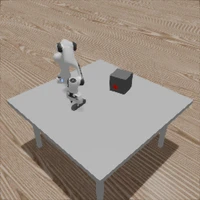
  • 5 authors
·
Dec 2, 2019

Synthetic Computers at Scale for Long-Horizon Productivity Simulation

Realistic long-horizon productivity work is strongly conditioned on user-specific computer environments, where much of the work context is stored and organized through directory structures and content-rich artifacts. To scale synthetic data creation for such productivity scenarios, we introduce Synthetic Computers at Scale, a scalable methodology for creating such environments with realistic folder hierarchies and content-rich artifacts (e.g., documents, spreadsheets, and presentations). Conditioned on each synthetic computer, we run long-horizon simulations: one agent creates productivity objectives that are specific to the computer's user and require multiple professional deliverables and about a month of human work; another agent then acts as that user and keeps working across the computer -- for example, navigating the filesystem for grounding, coordinating with simulated collaborators, and producing professional artifacts -- until these objectives are completed. In preliminary experiments, we create 1,000 synthetic computers and run long-horizon simulations on them; each run requires over 8 hours of agent runtime and spans more than 2,000 turns on average. These simulations produce rich experiential learning signals, whose effectiveness is validated by significant improvements in agent performance on both in-domain and out-of-domain productivity evaluations. Given that personas are abundant at billion scale, this methodology can in principle scale to millions or even billions of synthetic user worlds with sufficient compute, enabling broader coverage of diverse professions, roles, contexts, environments, and productivity needs. We argue that scalable synthetic computer creation, together with at-scale simulations, is highly promising as a foundational substrate for agent self-improvement and agentic reinforcement learning in long-horizon productivity scenarios.

microsoft Microsoft
·
Apr 29 2

A Unified Module for Accelerating STABLE-DIFFUSION: LCM-LORA

This paper presents a comprehensive study on the unified module for accelerating stable-diffusion processes, specifically focusing on the lcm-lora module. Stable-diffusion processes play a crucial role in various scientific and engineering domains, and their acceleration is of paramount importance for efficient computational performance. The standard iterative procedures for solving fixed-source discrete ordinates problems often exhibit slow convergence, particularly in optically thick scenarios. To address this challenge, unconditionally stable diffusion-acceleration methods have been developed, aiming to enhance the computational efficiency of transport equations and discrete ordinates problems. This study delves into the theoretical foundations and numerical results of unconditionally stable diffusion synthetic acceleration methods, providing insights into their stability and performance for model discrete ordinates problems. Furthermore, the paper explores recent advancements in diffusion model acceleration, including on device acceleration of large diffusion models via gpu aware optimizations, highlighting the potential for significantly improved inference latency. The results and analyses in this study provide important insights into stable diffusion processes and have important ramifications for the creation and application of acceleration methods specifically, the lcm-lora module in a variety of computing environments.

  • 2 authors
·
Mar 24, 2024

From Abstraction to Reality: DARPA's Vision for Robust Sim-to-Real Autonomy

The DARPA Transfer from Imprecise and Abstract Models to Autonomous Technologies (TIAMAT) program aims to address rapid and robust transfer of autonomy technologies across dynamic and complex environments, goals, and platforms. Existing methods for simulation-to-reality (sim-to-real) transfer often rely on high-fidelity simulations and struggle with broad adaptation, particularly in time-sensitive scenarios. Although many approaches have shown incredible performance at specific tasks, most techniques fall short when posed with unforeseen, complex, and dynamic real-world scenarios due to the inherent limitations of simulation. In contrast to current research that aims to bridge the gap between simulation environments and the real world through increasingly sophisticated simulations and a combination of methods typically assuming a small sim-to-real gap -- such as domain randomization, domain adaptation, imitation learning, meta-learning, policy distillation, and dynamic optimization -- TIAMAT takes a different approach by instead emphasizing transfer and adaptation of the autonomy stack directly to real-world environments by utilizing a breadth of low(er)-fidelity simulations to create broadly effective sim-to-real transfers. By abstractly learning from multiple simulation environments in reference to their shared semantics, TIAMAT's approaches aim to achieve abstract-to-real transfer for effective and rapid real-world adaptation. Furthermore, this program endeavors to improve the overall autonomy pipeline by addressing the inherent challenges in translating simulated behaviors into effective real-world performance.

  • 4 authors
·
Mar 13, 2025